
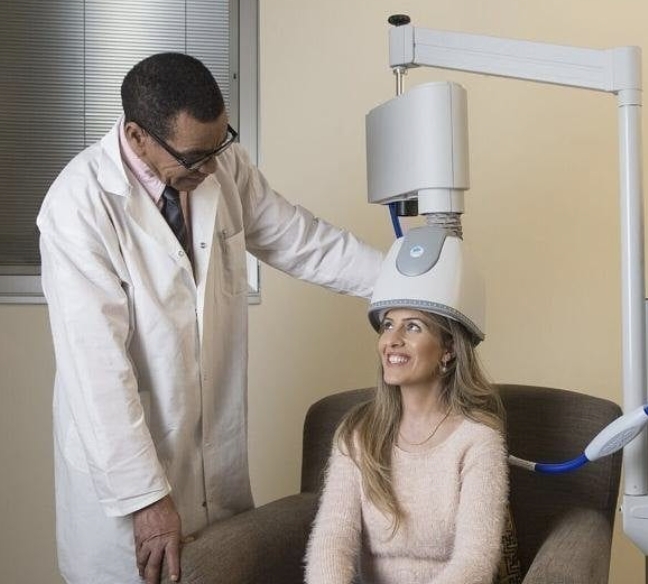
Quick answer: Transcranial Magnetic Stimulation (TMS) is an FDA-cleared, non-invasive treatment that uses magnetic pulses to stimulate the parts of the brain involved in mood regulation. It’s typically used for adults with major depressive disorder who haven’t responded adequately to antidepressant medication, and it doesn’t require anesthesia, needles, or downtime.
TMS often gets described to patients in one of two ways: either they’ve never heard of it, or they’ve heard just enough to be curious and a little unsure. Here’s what TMS therapy actually is, how it works, and who tends to benefit most.
What Is TMS, in Plain Terms?
TMS stands for Transcranial Magnetic Stimulation. During treatment, a provider places a small magnetic coil against your scalp, near the front of your head. The device delivers short magnetic pulses that pass painlessly through the skull and stimulate nerve cells in the region of the brain linked to mood regulation — typically the left dorsolateral prefrontal cortex, an area that tends to be underactive in people with depression.
Unlike electroconvulsive therapy (ECT), TMS doesn’t involve sedation, doesn’t cause memory loss, and doesn’t require you to stop your normal routine. You’re awake and alert throughout the session, and most patients drive themselves to and from appointments.
TMS was cleared by the FDA in 2008 for treatment-resistant depression, and its use has since expanded to other conditions, including OCD.
Who Is a Good Candidate for TMS?
TMS is generally considered for adults who:
- Have been diagnosed with major depressive disorder
- Have tried at least one antidepressant medication without adequate relief, or who can’t tolerate the side effects of medication
- Are looking for a non-medication or medication-adjunct option
- Don’t have contraindications such as certain implanted metal devices or a history of seizures
A psychiatric evaluation is the only way to know for sure whether TMS is appropriate for your specific situation, since a provider needs to review your full medical and psychiatric history first.
What a Course of TMS Treatment Looks Like
TMS is delivered as a series of sessions rather than a one-time procedure. Depending on the specific protocol your provider uses, a typical course involves:
- Sessions five days a week over roughly four to six weeks
- Each session lasting anywhere from a few minutes to about 20-40 minutes, depending on the treatment protocol
- No anesthesia or sedation required
- The ability to return to work, driving, or other normal activities immediately afterward
During a session, you’ll feel a tapping or knocking sensation on your scalp where the coil is positioned. Some patients describe mild scalp discomfort or a headache, particularly during the first few sessions, which typically improves as treatment continues.
What the Research Says About TMS Effectiveness
TMS has been studied extensively since its FDA clearance. Clinical research has generally shown that a meaningful portion of patients with treatment-resistant depression experience significant symptom improvement, and many achieve full remission. Results vary by individual, and your provider can walk you through what the evidence shows and what a realistic outcome might look like for your specific case.
Is TMS Safe?
TMS has a strong safety profile. The most common side effects are scalp discomfort and headache at the treatment site, which are usually mild and tend to decrease over the course of treatment. Serious side effects, such as seizure, are rare. TMS does not carry the systemic side effects associated with oral antidepressants, such as weight changes, sexual side effects, or drowsiness, because it isn’t absorbed through the bloodstream.
TMS El Paso
We specialize in TMS therapy across our three El Paso locations — for patients whose depression hasn’t responded to medication alone. Our providers oversee TMS treatment plans as part of a broader, evidence-based approach to psychiatric care for ages 12 to 65+.
Who Shouldn’t Get TMS
TMS isn’t appropriate for everyone, which is part of why a thorough evaluation always comes before treatment. Providers generally screen for contraindications including certain implanted metal devices or medical devices near the head (such as some aneurysm clips, stents, or cochlear implants), a personal history of seizures or conditions that increase seizure risk, and other factors specific to your medical history. None of these automatically rule someone out permanently, but they’re exactly why your provider needs a complete medical history before recommending TMS, not just a psychiatric one.
It’s also worth noting that TMS hasn’t been as extensively studied in certain populations, including pregnant patients, which is another reason your provider will want a full picture of your current health before moving forward. If you fall into a category that requires extra caution, your provider will walk you through what’s known and unknown, and help you weigh that information as part of your decision.
How TMS Fits Into a Broader Treatment Plan
TMS is rarely used as a completely isolated treatment. Most providers continue to monitor your symptoms with the same tools used throughout psychiatric care — regular check-ins, standardized symptom questionnaires, and ongoing conversations about how you’re functioning day to day. Many patients also continue psychotherapy during their TMS course, since the two aren’t mutually exclusive and can reinforce each other: TMS addresses the underlying neurological piece, while therapy builds skills for managing thought patterns and stress. Some patients also remain on a stable dose of medication throughout treatment. Your provider will help you understand how TMS fits alongside whatever else is already part of your care.
Frequently Asked Questions
Does TMS hurt?
Most patients describe the sensation as a tapping or knocking feeling on the scalp rather than pain. Some mild discomfort or headache is possible, especially in the first sessions, and typically decreases over time.
How is TMS different from ECT?
TMS is non-invasive and doesn’t require anesthesia, sedation, or a recovery period — you’re awake and alert throughout, and can drive yourself home. ECT involves anesthesia and is typically reserved for more severe or urgent cases.
How soon will I notice a difference with TMS?
Some patients notice improvement within the first couple of weeks, though for most, meaningful changes become clearer as the full course of treatment progresses. Your provider will track your symptoms throughout treatment to monitor your response.
Can I stop TMS partway through if I’m not seeing results?
This is a conversation to have directly with your provider rather than a decision to make alone. Because TMS works cumulatively, stopping early may not give the treatment a fair chance to show its full effect, but your provider can help you evaluate your progress honestly at any point in the course.
Will I need TMS again in the future?
Some patients experience lasting benefit after a single course, while others benefit from occasional maintenance or booster sessions if symptoms begin to return. Your provider will discuss what makes sense based on how you respond.
This article is for informational purposes only and is not a substitute for a professional psychiatric evaluation.