
Quick answer: TMS and antidepressant medication treat depression differently — medication works systemically through the bloodstream and brain chemistry, while TMS directly stimulates a specific brain region using magnetic pulses. They aren’t necessarily competing options: many patients try medication first, and move to TMS if antidepressants haven’t provided enough relief, or use both together.
One of the most common questions patients ask when they first learn about TMS is simple: how is this different from just taking an antidepressant, and how do I know which one is right for me? The honest answer is that it depends on your history, how you’ve responded to treatment so far, and what your provider finds during a thorough evaluation. Here’s how the two approaches compare.
How Antidepressant Medications Work
Antidepressants — most commonly SSRIs and SNRIs — work by adjusting the levels of neurotransmitters like serotonin and norepinephrine throughout the brain and body. Because they circulate systemically, they can affect more than just mood-related brain circuits, which is part of why side effects like nausea, weight changes, sexual side effects, or sleep disruption sometimes occur.
Medication is often the first treatment tried for depression, in part because it’s accessible, well-studied, and effective for a large percentage of patients. It typically takes four to six weeks to assess whether a given medication and dose is working, and finding the right fit sometimes takes more than one attempt.
How TMS Works Differently
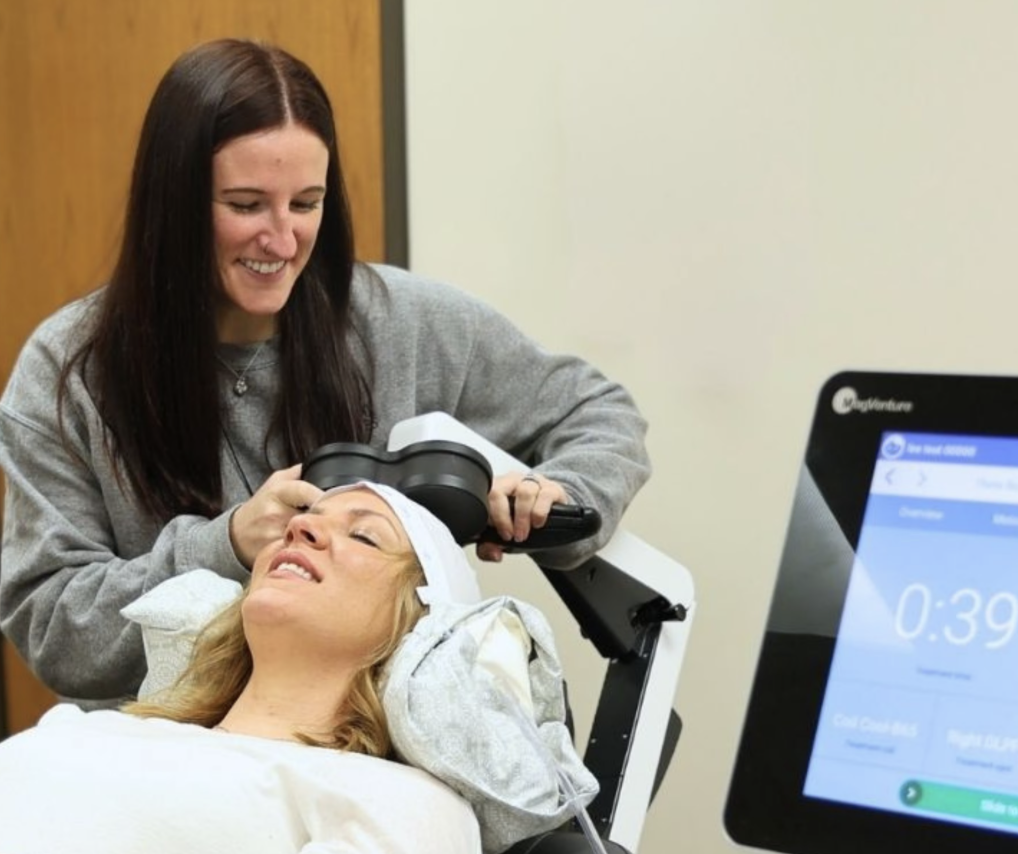
TMS, by contrast, doesn’t travel through the bloodstream at all. It uses a magnetic coil placed near the scalp to deliver targeted pulses directly to the region of the brain associated with mood regulation. Because it’s localized rather than systemic, TMS avoids many of the side effects associated with oral medication — there’s no risk of weight gain, sexual side effects, or drowsiness from TMS itself.
TMS is FDA-cleared specifically for patients who haven’t had an adequate response to antidepressant medication, which is why it’s often introduced after medication rather than as an automatic first step — though this isn’t a strict rule, and your provider will make a recommendation based on your specific situation.
Comparing the Two Side by Side
Mechanism: Medication adjusts brain chemistry systemically; TMS stimulates a specific brain region directly.
Side effects: Medication side effects can include nausea, weight changes, sexual side effects, and drowsiness. TMS side effects are typically limited to mild scalp discomfort or headache at the treatment site.
Time commitment: Medication is typically a daily pill you can take at home. TMS requires in-office visits, usually five days a week for several weeks.
Onset of effect: Both typically take several weeks to show meaningful results, though individual timelines vary.
Who it’s for: Medication is often tried first for newly diagnosed depression. TMS is typically recommended for patients who haven’t responded adequately to at least one antidepressant trial.
Can You Use Both Together?
Yes. TMS and medication aren’t mutually exclusive, and many patients continue taking their prescribed antidepressant while undergoing a course of TMS. Your psychiatric provider will help determine whether continuing medication alongside TMS makes sense for your treatment plan.
How a Provider Decides What to Recommend
A thorough psychiatric evaluation — reviewing your diagnosis, treatment history, side effect tolerance, and personal preferences — is what actually determines the right path. There’s no universal “better” option between TMS and medication; there’s only the option that fits your specific case.
Making the Decision at Arellano Advanced Psychiatry
At TMS El Paso, providers Alfredo H. Arellano, PMHCNS-BC, Eduardo Mariscal, PMHNP-BC, and Samantha Hernandez, PMHNP-BC, offer both medication management and TMS therapy under one roof, which means the decision about which path — or combination of paths — makes sense for you is made with providers who deliver both types of care themselves, rather than a referral to a separate specialist. The practice’s three El Paso locations, 1122 Montana Avenue, 2204 Joe Battle Blvd, and 1611 Beech Street, accept most major insurance plans.
What Patients Weighing Both Options Often Ask
Choosing between medication and TMS — or deciding whether to add TMS to a medication regimen that isn’t fully working — often comes down to a few practical considerations beyond the clinical picture. Some patients are drawn to TMS specifically because they’ve struggled with medication side effects that affected their daily functioning, such as fatigue, weight changes, or difficulty concentrating. Others are hesitant about the time commitment TMS requires, since it means in-office visits five days a week for several weeks, compared to a daily pill taken at home.
There’s no wrong preference here — both are legitimate factors in a treatment decision, and a good provider will talk through the practical realities of your daily schedule alongside the clinical recommendation. If time constraints make daily in-office visits difficult, it’s worth having that conversation directly, since some TMS protocols involve fewer, longer sessions rather than more frequent, shorter ones.
Cost and insurance coverage are also part of this conversation for most patients. Both medication and TMS are generally covered by major insurance plans when clinical criteria are met, though the specific out-of-pocket cost for each can differ based on your plan’s structure. Rather than assuming one option is automatically more affordable, it’s worth asking your provider’s office to walk through what your specific coverage looks like for each path before you decide.
Why This Decision Shouldn’t Be Made Alone
Because TMS and medication involve different risks, benefits, and practical demands, this is a decision best made in direct conversation with a psychiatric provider rather than based on general information alone — including this article. What’s true for depression treatment broadly may not apply to your specific diagnosis, treatment history, or health background, which is exactly what a psychiatric evaluation is designed to sort out.
Frequently Asked Questions
Do I have to try medication before I can get TMS?
Typically, TMS is FDA-cleared for patients who haven’t had an adequate response to at least one antidepressant. Your provider will review your treatment history during your evaluation to determine whether TMS is appropriate now or after further medication trials.
Is TMS more effective than medication?
Effectiveness varies by individual. TMS was developed specifically for patients whose depression didn’t respond well to medication, so for that group, it can offer meaningful relief where medication alone did not. Your provider can discuss what the evidence suggests for your specific case.
Will I need to stay on medication forever if I start TMS?
Not necessarily — this is a decision you’ll make with your provider based on how you respond to treatment. Some patients taper off medication after a successful TMS course, while others continue a maintenance regimen. Never adjust or stop medication without your provider’s guidance.
Is one option more expensive than the other?
Cost depends heavily on your specific insurance coverage for each type of treatment. Both medication management and TMS are generally covered by major insurance plans when clinical criteria are met — your provider’s office can help verify your specific benefits for each option.
Can I try TMS first if I’d simply rather avoid medication side effects?
This depends on your specific diagnosis and history, since TMS’s FDA clearance is generally tied to prior antidepressant response. Bring your preference to your evaluation — your provider can explain what’s clinically appropriate for your situation.
This article is for informational purposes only and is not a substitute for a professional psychiatric evaluation.